Ensuring UK Lab Report Compliance: A Guide to Regulatory Frameworks and Translation Services
Translation services for Laboratory Reports UK play a critical role in maintaining patient safety and regulatory compliance within the healthcare system. These services accurately translate lab reports into various languages, ensuring multilingual he…….

Translation services for Laboratory Reports UK play a critical role in maintaining patient safety and regulatory compliance within the healthcare system. These services accurately translate lab reports into various languages, ensuring multilingual healthcare professionals can interpret critical medical data effectively. The UK's strict regulatory framework, including standards set by the MHRA and compliance with legislation like the Medicines for Human Use (Clinical Trials) Regulations 2004 and GDPR, mandates precise documentation and translation to protect patient confidentiality and avoid legal issues. Failure to adhere to these regulations can lead to severe penalties. Therefore, laboratories in the UK must integrate specialized translation services to provide clear, accurate, and understandable reports for all stakeholders, thus upholding patient care integrity and compliance with medical standards. These translation services are bound by strict protocols to guarantee professional standards, confidentiality, and adherence to legal requirements, which is essential for the UK's multilingual population and its integration with international research efforts. In summary, translation services for Laboratory Reports UK are indispensable for upholding high-quality patient care and ensuring medical research integrity within the country's healthcare infrastructure.
Navigating the complex landscape of healthcare regulations in the UK is paramount for any laboratory conducting research or providing diagnostic services. This article delves into the critical aspects of ensuring lab reports are compliant with these regulations, emphasizing the role of translation services for Laboratory Reports UK in bridging language barriers and facilitating adherence to legal standards. We will explore the key regulatory frameworks that govern laboratory report compliance, followed by best practices to guarantee your reports meet all necessary healthcare standards within the UK. Additionally, we’ll guide you through selecting trustworthy translation services tailored to the unique demands of this sector.
- Navigating Compliance: The Necessity of Adhering to UK Healthcare Regulations for Lab Reports
- Understanding the Role of Translation Services in Compliance for Laboratory Reports in the UK
- Key Regulatory Frameworks Governing Lab Report Compliance in the UK
- Best Practices for Ensuring Your Lab Reports Meet UK Healthcare Standards
- Selecting Reliable Translation Services for Lab Reports: Factors to Consider in the UK
Navigating Compliance: The Necessity of Adhering to UK Healthcare Regulations for Lab Reports

Navigating the complex landscape of UK healthcare regulations is a critical aspect for laboratories in the United Kingdom. Ensuring compliance with these regulations is not merely a legal requirement but an integral part of maintaining public trust and ensuring patient safety. Laboratories must meticulously follow protocols to accurately document test results, which often involve intricate processes that require clear and precise communication. In this context, translation services for laboratory reports play a pivotal role. They facilitate the accurate translation of these reports into different languages as needed, ensuring that healthcare professionals from various backgrounds can access and comprehend the critical information contained within. This is particularly important in a diverse country like the UK, where clear and concise communication across linguistic barriers is essential for effective patient care. The use of professional translation services ensures that lab reports meet the necessary standards set by regulatory bodies such as the Medicines and Healthcare products Regulatory Agency (MHRA). By adhering to these standards, laboratories can protect patient confidentiality, avoid legal pitfalls, and uphold the integrity of the UK’s healthcare system. The consequences of non-compliance can be severe, ranging from legal action to compromising patient outcomes, making it imperative for laboratories to prioritize compliance with UK healthcare regulations in their lab report processes.
Understanding the Role of Translation Services in Compliance for Laboratory Reports in the UK
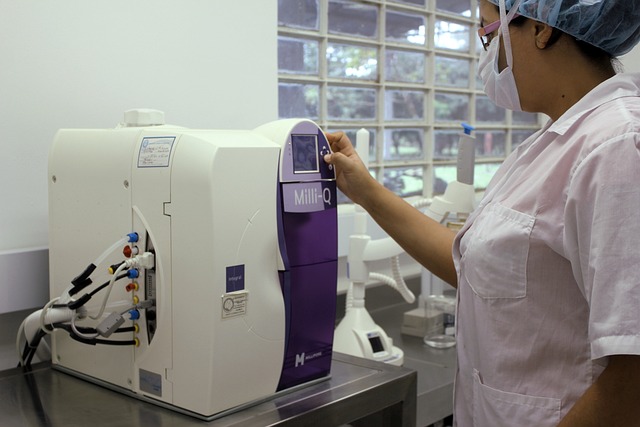
In the context of healthcare, laboratory reports serve as critical documents that facilitate accurate diagnosis, effective treatment plans, and informed decision-making for both patients and healthcare professionals. Within the UK, adherence to strict regulatory standards is paramount to ensure patient safety and maintain the integrity of medical research. Translation services for Laboratory Reports UK play a pivotal role in this compliance framework. These services are essential when dealing with multilingual populations or when integrating international research findings into the UK healthcare system. They bridge language barriers, enabling the precise translation of medical terminology and data between reports written in different languages and those required to be in English. This not only aids in the communication across diverse teams but also ensures that all stakeholders, including clinicians, researchers, and regulatory bodies, have access to information that is both accurate and legally compliant. The reliability of these translations is critical as they inform critical healthcare decisions and contribute to the maintenance of high standards of patient care and medical research integrity in the UK. Moreover, translation services for Laboratory Reports UK are subject to their own set of compliance protocols, which include adherence to professional translation standards and confidentiality agreements, thereby ensuring the sensitive nature of laboratory data is upheld throughout the translation process. This dedication to accuracy and compliance underscores the importance of these services in the healthcare sector, making them an indispensable component of the UK’s healthcare infrastructure.
Key Regulatory Frameworks Governing Lab Report Compliance in the UK

In the United Kingdom, laboratory reports play a critical role in healthcare, influencing patient care and regulatory decision-making. To ensure these reports meet the highest standards of accuracy and reliability, they are governed by a suite of regulatory frameworks. The Medicines for Human Use (Clinical Trials) Regulations 2004 and the Clinical Trials Act 2004 set out the standards for conducting clinical trials and the reporting of their results. These regulations are complemented by the General Data Protection Regulation (GDPR) and the UK’s Data Protection Act 2018, which govern the handling and protection of personal data within laboratory reports. The Good Clinical Practice (GCP) guidelines provide a comprehensive standard for the design, conduct, recording, and reporting of clinical trials that involve the participation of human subjects. Additionally, the UK’s Equality Act 2010 requires that healthcare services, including lab reporting, are accessible to all individuals. For laboratories needing assistance with translating findings within these regulatory frameworks, translation services for Laboratory Reports UK can be instrumental in ensuring that reports are not only compliant but also understandable across different linguistic and cultural contexts. These services ensure that the nuances of scientific data are accurately conveyed, facilitating clear communication between stakeholders and compliance with legal requirements. It is imperative for laboratories to stay abreast of these regulations to maintain the integrity of their reports and uphold the trust in healthcare systems across the UK.
Best Practices for Ensuring Your Lab Reports Meet UK Healthcare Standards

To ensure that laboratory reports in the UK meet stringent healthcare regulations, it is imperative to adhere to a set of best practices. These practices are designed to align with the standards set by bodies such as the Medicines and Healthcare products Regulatory Agency (MHRA) and the Clinical Pathology Accreditation Advisory Group (CPAAG). Firstly, all reports should be clear and concise, with findings presented in a manner that is easily understandable by healthcare professionals from various disciplines. This clarity is crucial for the accurate translation of laboratory results into clinical decision-making. Utilizing professional translation services for Laboratory Reports UK can bridge language barriers without compromising the integrity of the data. These services should be well-versed in medical terminology and regulatory requirements to ensure precise translations that comply with UK healthcare standards.
Furthermore, maintaining robust documentation and record-keeping practices is essential. This includes meticulous recording of all sample handling procedures, test methods, and equipment used, ensuring traceability and transparency in the reporting process. Quality control measures must be in place to validate the accuracy of results, and any deviations from standard protocols should be thoroughly documented and addressed. Additionally, staying abreast of regulatory updates and amending laboratory report formats accordingly is a proactive approach to compliance. By integrating these best practices into daily operations, laboratories can significantly enhance the reliability and compliance of their reports within the UK healthcare system.
Selecting Reliable Translation Services for Lab Reports: Factors to Consider in the UK

When laboratory reports require translation for use within the UK healthcare sector, selecting a reliable translation service is paramount to ensure compliance with stringent regulations. The accuracy and clarity of translated lab reports are crucial, as they often inform clinical decisions and contribute to patient safety. In the UK, where multilingual communication is common, it is essential to choose a translation service that specializes in scientific and medical terminology. Look for translation services for laboratory reports in the UK with a proven track record of experience in healthcare documentation. Their expertise will encompass not only linguistic proficiency but also an understanding of the regulatory framework governing lab reports, including the Clinical Trials Regulations and Good Clinical Practice (GCP) guidelines.
Furthermore, it is advisable to consider translation services that offer native speakers with subject matter expertise in the field of laboratory science. This ensures that all nuances of the original report are accurately captured in the target language. Additionally, the chosen service should be accredited by relevant bodies, such as the International Organization for Standardization (ISO), and possess a clear understanding of the Confidentiality Agreement necessary to protect sensitive data. By carefully vetting translation services for laboratory reports in the UK, healthcare organizations can confidently bridge linguistic barriers while maintaining compliance with all regulatory requirements.
In concluding this discussion on lab report compliance within the UK healthcare sector, it is clear that adherence to stringent regulatory standards is non-negotiable. The intricacies of UK healthcare regulations necessitate careful navigation and a commitment to excellence, particularly when translation services for laboratory reports are involved. This article has outlined the critical frameworks and best practices essential for compliance, emphasizing the importance of selecting competent translation services for laboratory reports in the UK. By understanding the regulatory landscape and implementing the recommended strategies, healthcare professionals and laboratories can ensure their reports are not only accurate but also compliant, facilitating seamless communication and fostering trust within the medical community. It is through these measures that the integrity of laboratory reporting is upheld, ultimately contributing to the delivery of high-quality patient care.